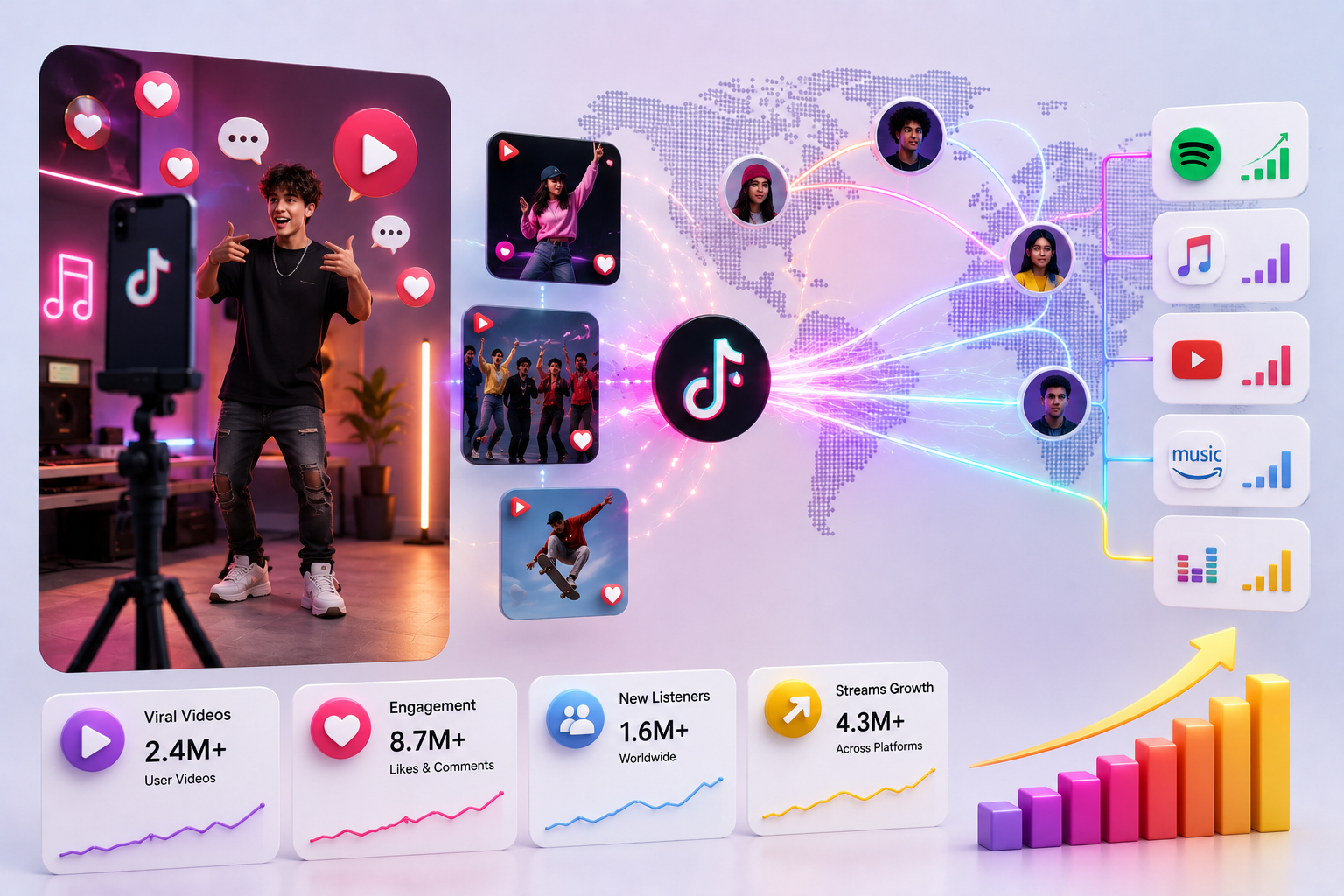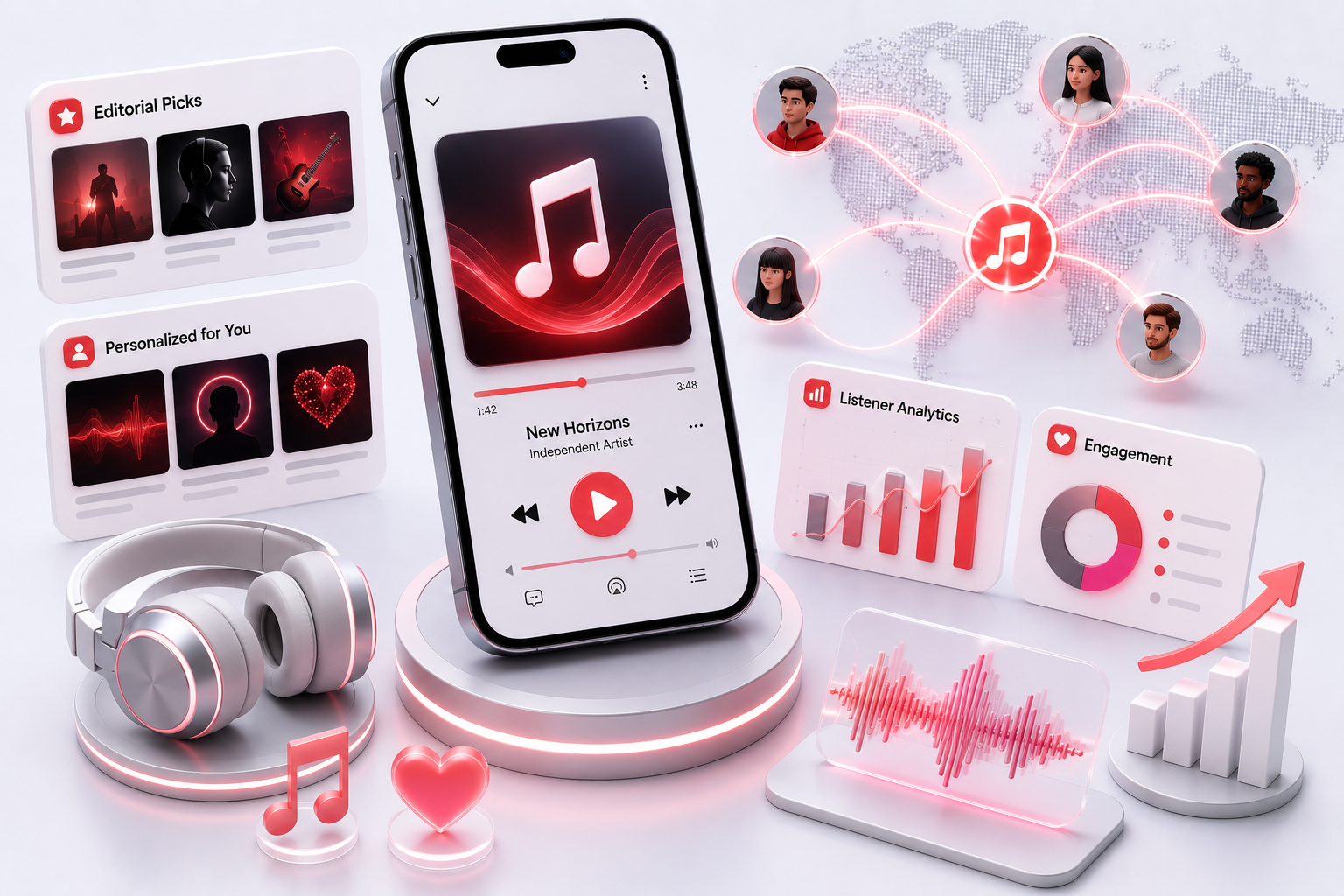
The music industry has changed dramatically over the past few years. Today, independent artists no longer need a major record label to reach listeners around the world. With digital music distribution, musicians can release songs globally and build a loyal fanbase while maintaining complete ownership of their music.
Whether you're releasing your first single or managing an entire catalog, understanding how music distribution works can help you grow faster and earn more from your music.
What is Music Distribution?
Music distribution is the process of delivering your songs to streaming platforms and digital stores such as Spotify, Apple Music, YouTube Music, Amazon Music, TikTok, Instagram, Deezer, Pandora, and many more.
Instead of uploading music separately to every platform, artists use a music distributor that handles everything from delivery to metadata management, ISRC generation, royalty reporting, and release updates.
Why Global Distribution Matters
Your next listener could be anywhere in the world.
Streaming platforms recommend music based on listening habits rather than geography. This means an artist from India can gain fans in Brazil, Germany, Indonesia, or the United States without ever performing there.
Global distribution allows your music to:
- Reach listeners in over 150 countries
- Appear on major streaming platforms
- Become eligible for editorial and algorithmic playlists
- Generate royalties from worldwide streams
- Build an international audience
Keep 100% Control of Your Music
One of the biggest advantages of independent distribution is ownership.
Artists retain complete control over:
- Master recordings
- Copyright ownership
- Release schedule
- Artwork
- Metadata
- Marketing strategy
Instead of giving away rights, creators can build long-term value from every release.
Consistency Builds an Audience
Successful artists rarely become popular after one release.
A consistent release strategy helps streaming platforms understand your audience while keeping listeners engaged.
Consider releasing:
- Singles every 4–6 weeks
- EPs after multiple singles
- Albums for dedicated fans
- Acoustic versions
- Remixes
- Live recordings
Frequent releases create more opportunities for discovery.
Optimize Every Release
Professional releases perform better than incomplete ones.
Before publishing music, make sure you have:
- High-quality artwork
- Correct artist name
- Accurate song title
- Genre selection
- Composer and lyricist information
- ISRC codes
- UPC codes
- High-resolution WAV files
Well-organized metadata helps streaming services categorize your music correctly.
Promote Beyond Streaming Platforms
Distribution gets your music online, but promotion helps people discover it.
Some effective promotional methods include:
- Instagram Reels
- TikTok videos
- YouTube Shorts
- Facebook posts
- Email newsletters
- Spotify playlist pitching
- Influencer collaborations
- Music blogs
- Press releases
Marketing and distribution work best when combined.
Understand Your Royalties
Every stream can generate revenue depending on the platform, territory, and subscription type.
Artists should regularly monitor:
- Streaming royalties
- Download revenue
- Country-wise performance
- Platform analytics
- Monthly earnings
Understanding your analytics helps you identify where your listeners are and which songs perform the best.
Build a Long-Term Music Career
Music distribution is not just about uploading songs.
It is the foundation of a professional music career. Every release strengthens your catalog, increases discoverability, and creates new earning opportunities.
Independent artists who consistently release quality music, engage with fans, and use professional distribution services are better positioned to grow globally in today's digital music industry. Recent industry developments also continue to emphasize stronger artist ownership, fan engagement, and responsible use of new technologies across digital music platforms.
Final Thoughts
The opportunity for independent artists has never been greater. With the right music distribution strategy, consistent releases, and effective promotion, musicians can reach millions of listeners worldwide without depending on traditional record labels.
Success in today's music industry belongs to artists who create consistently, market intelligently, and make their music available everywhere their audience listens.