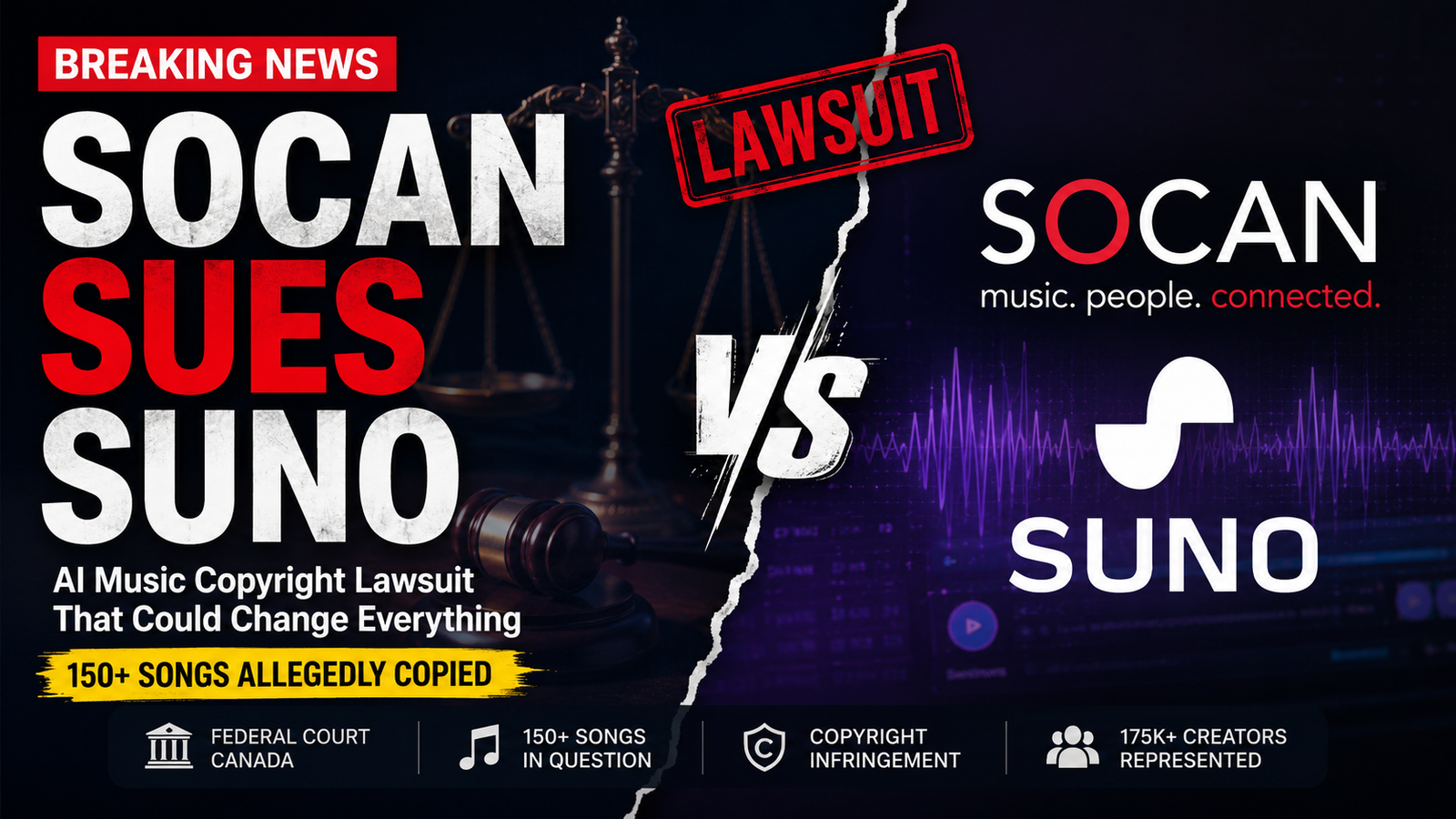
The AI music industry has entered one of its most important legal battles yet. SOCAN (Society of Composers, Authors and Music Publishers of Canada) has officially filed a copyright lawsuit against Suno AI, alleging that the platform generated music that unlawfully copies protected songs without permission.
The case has quickly become global news because its outcome could influence how AI music is created, distributed, and monetized across the music industry.
What is SOCAN?
SOCAN is Canada's largest music rights organization, representing more than 175,000 songwriters, composers, and music publishers. The organization protects creators' copyrights, licenses musical works, and collects royalties whenever members' music is used commercially.
Its primary mission is simple: ensure creators are paid fairly and that copyrighted music isn't used without authorization.
Why is Suno being sued?
According to the lawsuit, SOCAN claims that Suno:
- Used copyrighted songs without obtaining licenses.
- Generated AI music that closely resembles original compositions.
- Made those allegedly infringing works available to users in Canada.
The legal filing reportedly includes over 150 AI-generated songs that SOCAN believes reproduce recognizable elements of copyrighted music, making it one of the largest copyright actions ever brought against an AI music platform.
Songs mentioned in the case
SOCAN says its evidence includes comparisons between well-known songs and AI-generated outputs. Among the works referenced are songs by:
- Avril Lavigne
- Tom Cochrane
- Joni Mitchell
- Alexisonfire
The organization argues that several Suno-generated tracks go beyond inspiration and allegedly imitate protected musical expression.
Suno's response
Suno has denied the allegations and maintains that its platform is designed to help users create original music, not copy existing recordings.
The company says it intends to defend itself in court, emphasizing that the lawsuit contains allegations that have not yet been proven. At this stage, no court has ruled that Suno is liable for copyright infringement.
What does this mean for artists and distributors?
This lawsuit does not make AI-generated music illegal. However, it sends a strong message that originality will become increasingly important for anyone releasing AI-assisted music.
| AI Music Type | Risk Level |
|---|---|
| Original composition | Low |
| Similar musical style | Medium |
| Similar melody or lyrics | High |
| Direct imitation of a famous song | Very High |
Artists who use AI as a creative tool should focus on producing genuinely original works rather than recreating recognizable songs or melodies.
Why this case matters globally
The SOCAN vs Suno lawsuit could establish an important legal precedent for AI music. If courts decide that copyrighted music was improperly used, AI companies may be required to obtain licenses from publishers and rights organizations before training or generating music.
That could reshape:
- AI music licensing
- Copyright protection for songwriters
- Distribution policies
- Monetization of AI-generated music
Final Thoughts
The battle between SOCAN and Suno is about much more than one company—it's about defining the future relationship between artificial intelligence and music copyright. While the legal process is still ongoing, the case highlights a growing industry reality: AI innovation must coexist with creators' rights.
For musicians, producers, and distributors, creating truly original music remains the safest and most sustainable path forward.