Every day, over 120,000 tracks are uploaded to streaming platforms. Behind every single one of those tracks that actually reaches listeners, generates income, and builds a fanbase, is a crucial engine: digital music distribution.
If you're an independent artist, you might think the hardest part of releasing music is getting the final mix just right. But once the track is mastered, how do you actually get it onto Spotify, Apple Music, or a viral TikTok sound? You can't just upload it directly to these platforms.
This is where digital distribution steps in. Here is why having a solid distribution strategy is non-negotiable for any modern musician.
What is Digital Music Distribution?
Historically, distribution meant physical trucks driving vinyl and CDs from record label warehouses to local record shops. Today, it’s a digital pipeline.
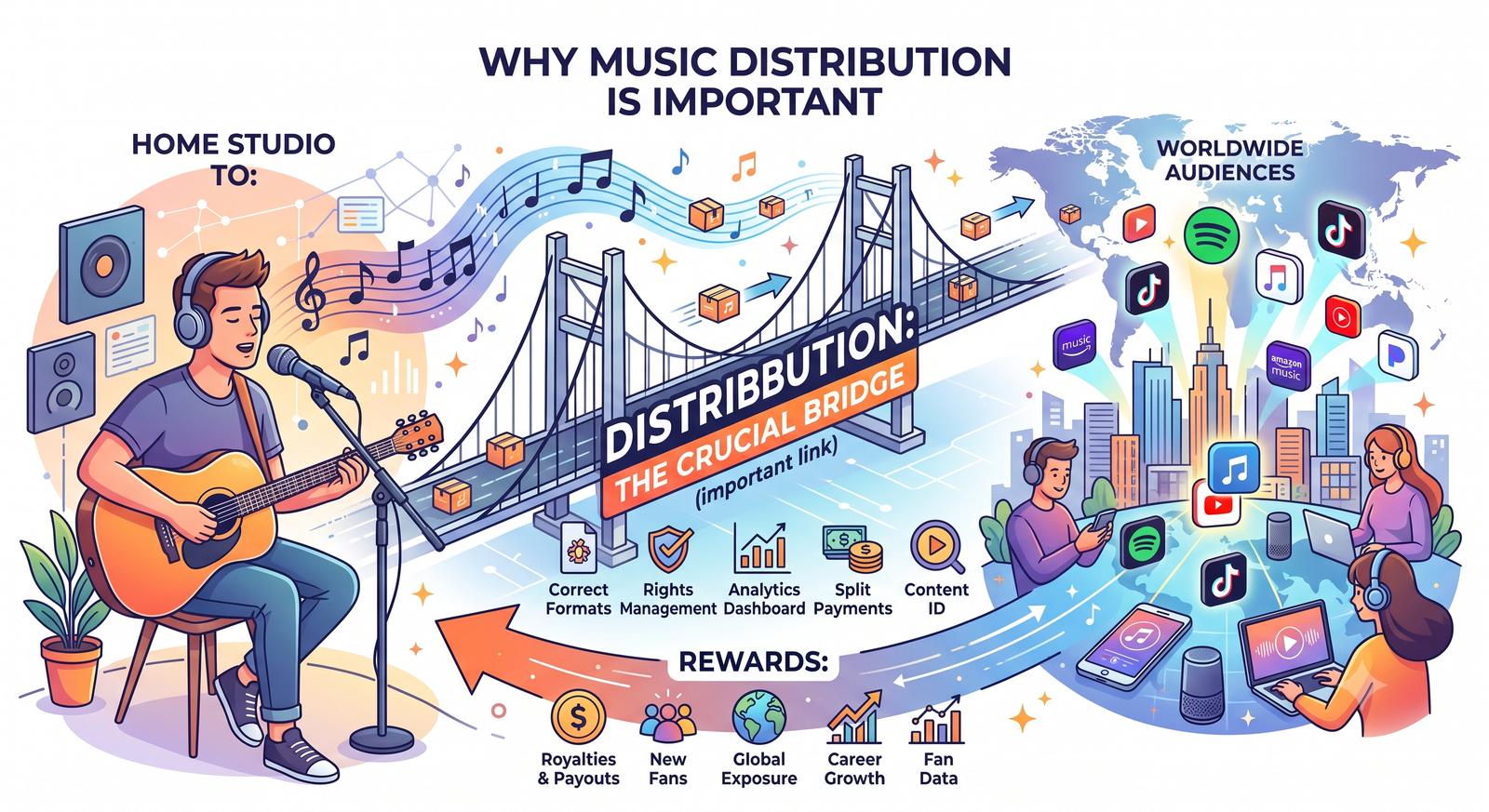
A music distributor (such as DistroKid, TuneCore, Amuse, or UnitedMasters) acts as the intermediary between you and Digital Service Providers (DSPs) like Spotify, Apple Music, Amazon Music, and TikTok. They take your high-quality audio files and album art, format them to each platform's strict specifications, and push them live to the world.
Why Distribution is Essential for Your Career
1. You Can't Get on Major Platforms Without It
Most major streaming services do not allow direct uploads from independent artists. They rely on approved distributors to ensure audio quality, enforce copyright standards, and manage the massive influx of data. Without a distributor, your music is locked out of the exact places where listeners spend the vast majority of their time.
2. It’s How You Get Paid
Distribution isn't just about placement; it functions as your accounting department. Every time your song is streamed on Spotify, used in an Instagram Reel, or played on YouTube, it generates fractional royalties. Your distributor collects these micro-pennies from dozens of platforms across hundreds of countries, consolidates them, and pays them out to you in a single dashboard.
3. Metadata and Rights Protection
A good distributor handles the invisible infrastructure of your music:
- ISRCs and UPCs: Distributors assign these unique identification codes to your tracks. They act like a digital fingerprint to track every stream and sale accurately.
- Split Payments: If you collaborated with a producer or a featured vocalist, many modern distributors automatically split the royalties so you don't have to deal with manual math and awkward Venmo requests.
- Content ID: They register your music with systems like YouTube Content ID, ensuring that if someone else uses your track in their vlog or video, you get the ad revenue.
4. Audience Data and Analytics
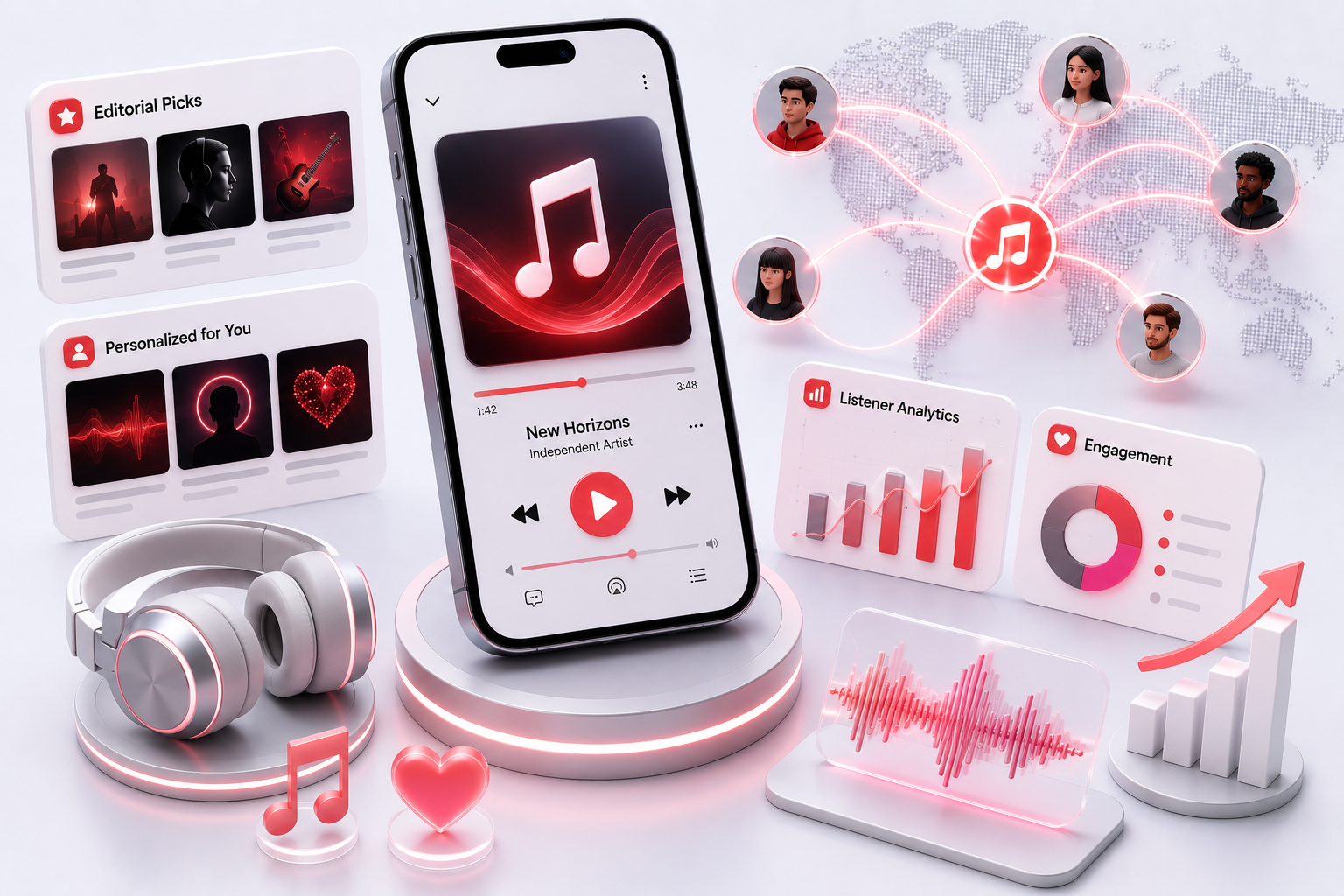
To grow your fanbase, you need to know who they are. Distributors provide centralized analytics dashboards showing where your listeners live, which platforms they use, and which tracks are performing best. This data is invaluable for planning tours, targeting social media ads, and deciding where to focus your promotional energy.
The 2026 Landscape: It's More Than Just Uploading
The distribution landscape has evolved heavily in recent years. It's no longer just a "set it and forget it" upload service.
- The Superfan Economy: Streaming volume alone rarely pays the rent for emerging artists. Modern distributors are increasingly integrating tools that help artists identify their top listeners, paving the way for direct-to-fan sales, exclusive merch, and VIP experiences.
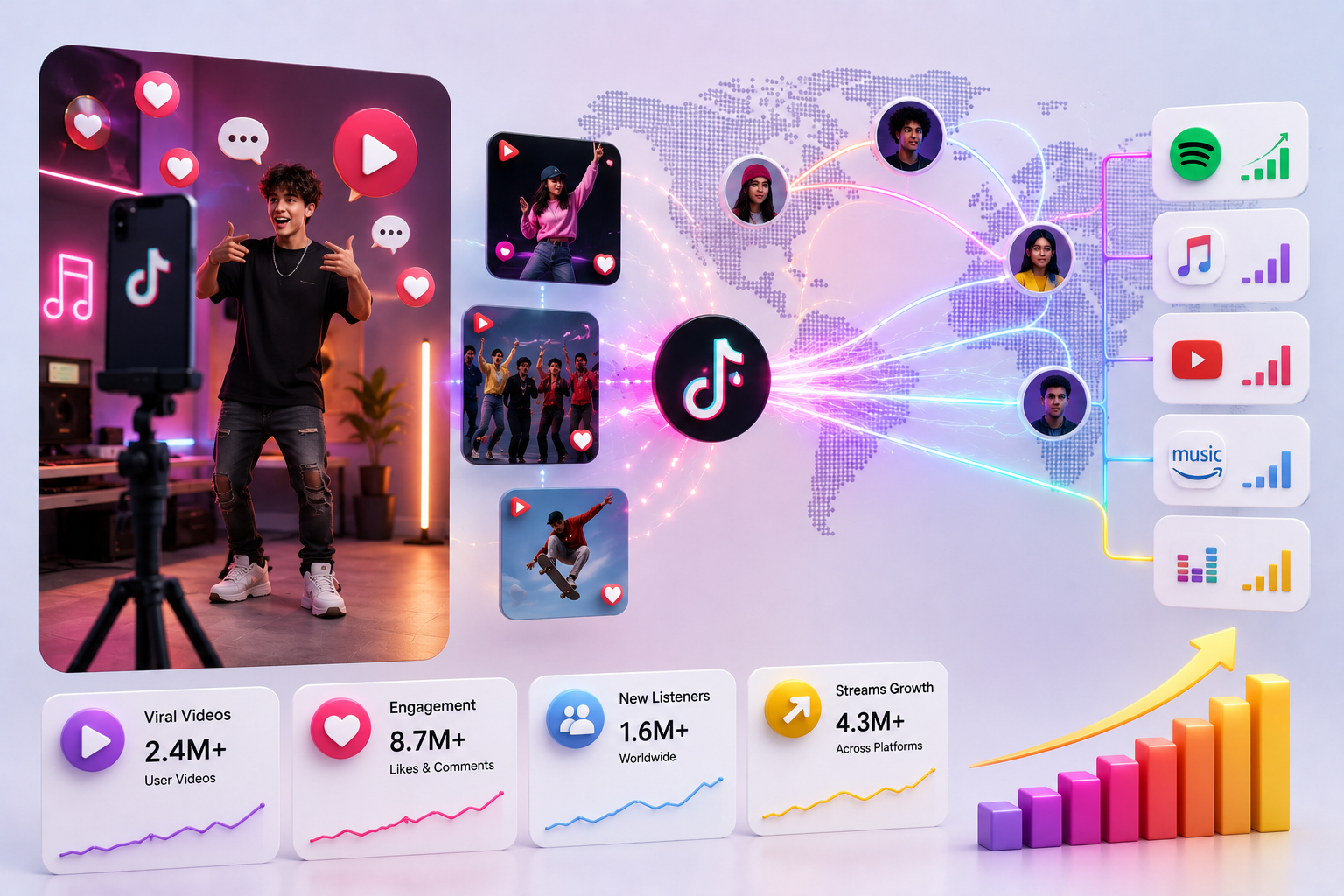
- Social Commerce: The line between a TikTok scroll and a music discovery is practically gone. Getting your music distributed correctly to social platforms is now just as important as traditional DSPs, because short-form video drives the majority of modern music discovery.
The Takeaway
Music distribution is what turns a localized file on your laptop into a global release. It legitimizes your art, protects your rights, and ensures you get paid for your work.
When choosing a distributor, don't just look for the cheapest option. Look at their royalty retention rates (do they let you keep 100% of your earnings?), hidden fees, payout speeds, and the level of customer support they offer. Your distributor is your most important business partner — choose one that aligns with your long-term career goals, and let them handle the logistics while you focus on the music.