Creating a great song is only part of the journey. Before your music reaches streaming platforms, one of the most important steps is preparing accurate metadata. While listeners may never notice it, metadata plays a major role in how your music is identified, distributed, and monetized.
Incorrect metadata can lead to delayed releases, royalty issues, duplicate artist profiles, or even missing streams. Understanding how it works helps artists release music professionally and avoid unnecessary problems.
What is Music Metadata?
Music metadata is the information attached to your song that tells streaming platforms exactly what your release contains.
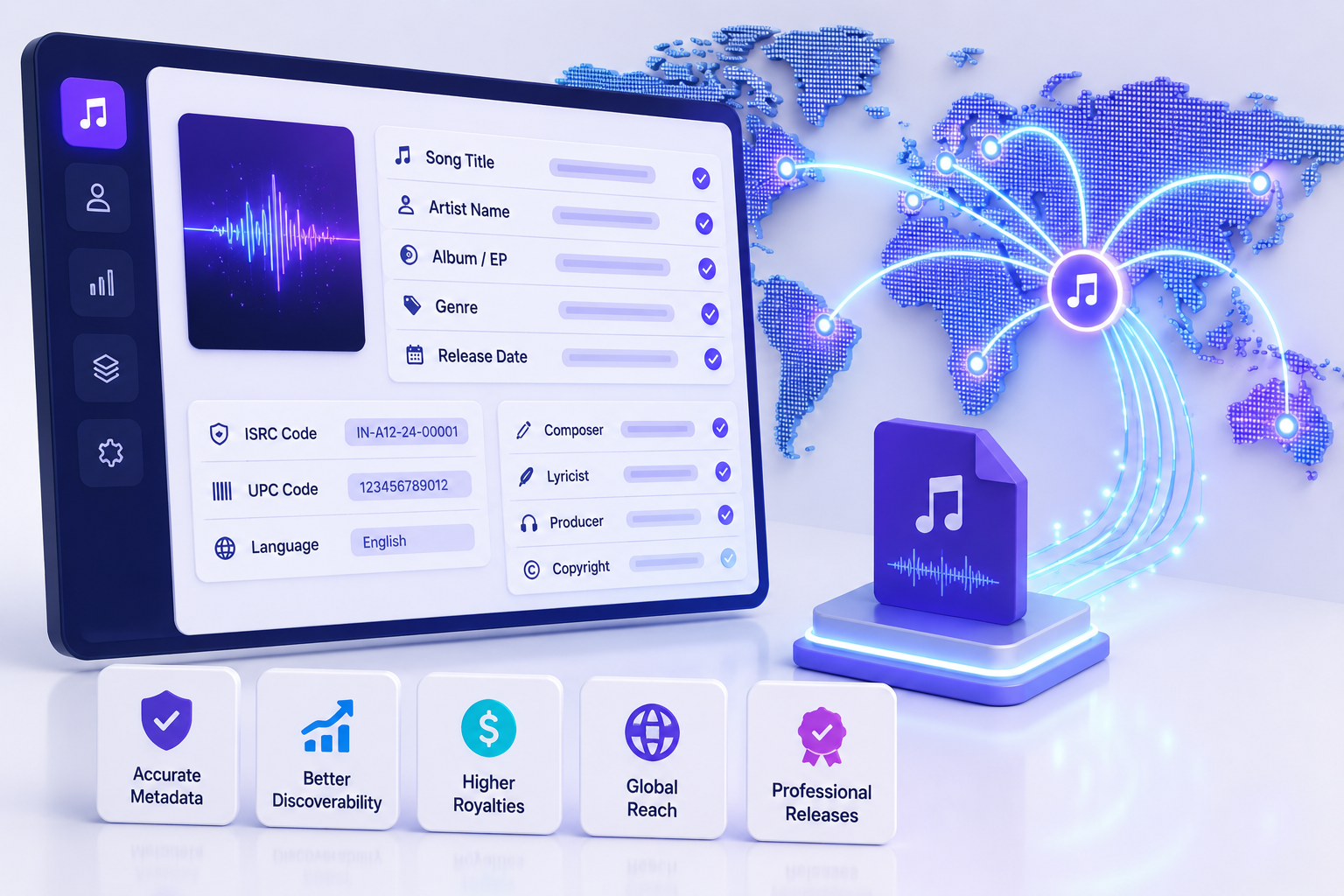
It includes details such as:
- Song Title
- Artist Name
- Featured Artists
- Album or EP Name
- Genre
- Language
- Composer
- Lyricist
- Producer
- Copyright Information
- Release Date
- ISRC Code
- UPC Code
- Explicit Content Status
Think of metadata as your song's digital identity.
Why Metadata is So Important
Streaming services use metadata to organize millions of songs.
Without accurate metadata, platforms may struggle to identify your release correctly, which can affect search visibility, recommendations, playlist eligibility, and royalty tracking.
Good metadata ensures your music appears exactly where it should.
Artist Name Consistency
Always use the same spelling of your artist name.
For example:
✔ DJ Alpha
❌ DJ Alpha Official
❌ DJ ALPHA
❌ DJ Alpha Music
Changing your artist name across releases may create multiple artist profiles on streaming platforms.
Consistency builds your catalog and helps fans find all your music in one place.
Choosing the Right Genre
Genres help streaming platforms understand your music and recommend it to the right audience.
Instead of selecting random categories, choose the genre that best represents your sound.
Examples include:
- Pop
- Hip-Hop
- Rap
- R&B
- EDM
- Punjabi
- Classical
- Rock
- Folk
- Lo-fi
- Instrumental
Accurate genres improve discoverability.
ISRC and UPC Codes
Two important identifiers are used in digital distribution.
ISRC
Every individual song receives an ISRC (International Standard Recording Code).
This code permanently identifies a recording and is used for royalty tracking worldwide.
UPC
A UPC identifies the entire release, whether it is a single, EP, or album.
It allows stores to recognize the complete package of songs.
Credits Matter
Always provide complete credits for your release.
This may include:
- Composer
- Lyricist
- Producer
- Mixing Engineer
- Mastering Engineer
- Copyright Owner
Proper credits ensure everyone involved receives recognition and make your release appear more professional.
Release Date Planning
Avoid uploading music at the last minute.
Schedule your release in advance so streaming platforms have enough time to process your music.
Early scheduling also gives you time to:
- Plan marketing campaigns
- Create social media content
- Submit for playlists
- Build anticipation among fans
Common Metadata Mistakes
Many first-time artists make simple errors that delay releases.
Some common mistakes include:
- Misspelled artist names
- Incorrect song titles
- Wrong language selection
- Missing composer information
- Incorrect release dates
- Uploading different artist names on different releases
- Incorrect copyright ownership
Double-check everything before submitting your release.
Metadata Helps You Get Paid
Streaming platforms rely on metadata to calculate royalties.
If information is incomplete or incorrect, revenue may be delayed or assigned incorrectly.
Professional metadata ensures that your earnings are properly tracked across platforms.
Final Thoughts
Music metadata may seem like a small detail, but it has a huge impact on your success as an independent artist.
Taking a few extra minutes to review your metadata before releasing your music can prevent delays, improve discoverability, and help ensure that your royalties are accurately tracked.
Every professional release begins with accurate information.